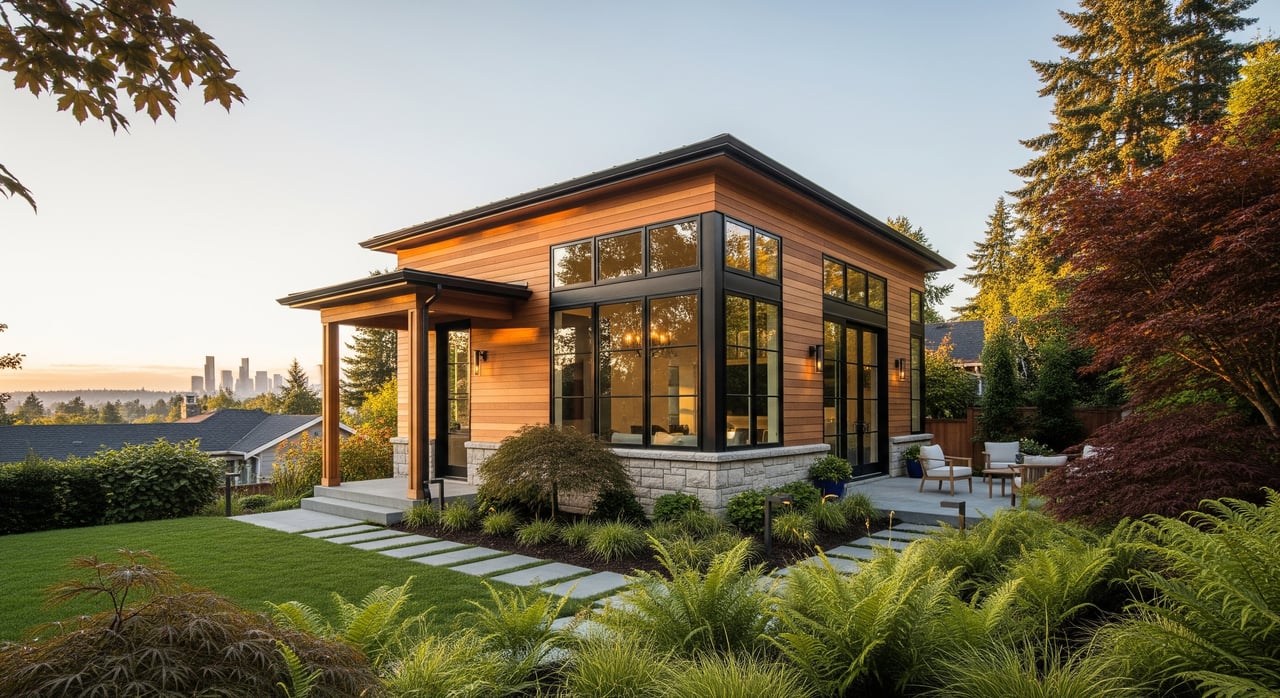
Thinking about adding a rental unit, space for family, or future flexibility without leaving your Bellevue neighborhood? An accessory dwelling unit can open that door. You may be weighing costs, rules, and how an ADU fits your long-term plans. In this guide, you’ll learn what counts as an ADU, how Bellevue’s process works, what to verify before you spend money, and practical next steps whether you plan to rent, live multigenerational, or sell with an ADU. Let’s dive in.
What is an ADU in Bellevue?
An accessory dwelling unit is a smaller, independent home on the same lot as your primary house. Common types include:
- Attached ADU: a basement, over-garage, or side addition that is connected to your main home.
- Detached ADU (often called a DADU or backyard cottage): a separate small structure on your lot.
- Interior conversion: turning a basement, attic, or accessory space into a self-contained unit.
- Garage conversion: repurposing an existing garage into living space.
Homeowners choose ADUs for practical reasons. You can create long-term rental income, keep family close, increase resale appeal, or gain flexible space that can shift from an office or guest suite to a future rental. The tradeoffs are real. You will navigate permits and code compliance, invest in construction, manage tenants if you rent, and plan for changes in taxes and insurance.
How ADUs fit Bellevue’s rules
ADUs live at the intersection of city rules, state law, and sometimes private restrictions. In Bellevue, you should verify the following layers before you start design work:
- City of Bellevue municipal code and Development Services requirements that govern zoning, dimensional limits, and permits.
- Washington State laws that shape what local governments can require for ADUs.
- King County processes if your property sits in an area where county systems apply.
- Homeowners’ association covenants that can restrict ADUs or rentals even when the city allows them.
Key topics to confirm with Bellevue Development Services include:
- Allowed zones for attached and detached ADUs.
- The number of ADUs permitted on one lot and any owner-occupancy rules.
- Maximum size, height, setbacks, and lot coverage limits.
- Parking requirements and any exemptions or special provisions.
- Conversion standards for garages and basements, including egress and ceiling height.
- Utility and sewer connection or metering rules, plus any impact or connection fees.
- Short-term rental regulations if you want to explore nightly or weekly rentals.
- Building, energy, and life-safety code requirements for construction and inspections.
Rules and procedures evolve. Treat the city’s current guidance as your source of truth and confirm details early.
Step-by-step process to build an ADU
1) Start with feasibility
Begin with a zoning and site check. Confirm your lot’s zoning, setbacks, and any overlays with Bellevue Development Services. If you have an HOA, review covenants for ADU or rental restrictions. Check your utilities and sewer capacity, and verify if your site has septic, which brings separate requirements.
A pre-application conversation with the city can save time and money. Bring a rough sketch of your idea and questions about location, parking, and size.
2) Build a budget and finance plan
Costs vary by type and complexity. Interior conversions are generally the most cost-effective. A detached new build usually costs more due to foundation, utilities, and site work. In the Puget Sound region, labor and materials often run higher than national averages.
Create a basic pro forma. List your likely costs, then estimate rent using local comparables. Consider vacancy, maintenance, and management. Get two or three contractor bids and talk with a lender about financing options before you finalize design.
Common financing paths include cash, a home equity line of credit or home equity loan, a cash-out refinance, renovation or construction loans, and local bank construction financing. Some public agencies occasionally offer incentives or pilot programs, so ask about current options in Bellevue or King County.
3) Design for code and livability
Work with a designer or architect familiar with ADUs. You will typically need a site plan, floor plans, elevations, and sometimes structural, mechanical, electrical, plumbing, and energy documentation. Plan for privacy, light, and sound separation. For attached units, include fire separation and proper smoke and carbon monoxide alarms. For bedrooms, plan egress windows that meet code.
4) Submit permits and coordinate review
Most projects require a building permit. Many conforming ADUs are approved administratively if they meet standards. Projects that do not fit the exact rules may need additional review. The city will conduct plan review and schedule inspections during construction. Timelines vary with workload and your project’s completeness.
5) Build and pass inspections
Construction can take weeks to many months depending on scope. Interior conversions are typically faster than detached new builds. Your contractor will coordinate inspections at key milestones such as framing, rough-in for electrical and plumbing, insulation, and final occupancy.
6) Launch, rent, or hold for family
Once you pass final inspection, set up any required addresses or utility arrangements. If you plan to rent, prepare a lease, set a competitive rent based on local comps, and decide on property management. If the ADU is for family, dial in accessibility features such as single-level access and minimal steps that improve comfort.
Cost, financing, and ROI
ADU budgets reflect design choices and site conditions. The same type can vary widely based on finishes, access, grading, and utility work. Expect higher costs for detached units and new foundations, and lower costs when you can reuse existing space with minimal structural changes.
Financing options to discuss with lenders include:
- Cash or savings.
- Home equity line of credit or home equity loan.
- Cash-out refinance on your primary mortgage.
- Renovation or construction loans tailored to accessory units or major rehab.
- Local bank construction loans.
- Potential grants or incentives that may appear periodically in the region.
Run the economics like a small rental. Estimate market rent, subtract vacancy, maintenance, and management, then compare net income against your financing costs. Keep an eye on long-term resale value. Buyers often view legal ADUs as a plus in high-demand markets like Bellevue.
Two more financial notes:
- Property taxes: Adding permitted living space or a rental unit typically increases assessed value. The King County Assessor can explain how your project may affect your taxes.
- Insurance: Update your policy and ask about additional dwelling or landlord coverage. Some landlords require tenants to carry renters insurance.
Design and code checklist
Use this checklist to inform early decisions, then verify each item with the city or your designer:
- Size, height, and setbacks that fit your lot and any easements.
- Lot coverage and impervious surface limits for a detached unit.
- Parking requirements and whether tandem parking is acceptable.
- Safe access, address visibility, and lighting.
- Privacy strategies such as window placement and landscaping.
- Fire separation and sound insulation for attached units.
- Egress windows, smoke and carbon monoxide alarms, and ventilation.
- Energy code compliance for insulation and air sealing.
- Accessible features that make the unit comfortable for people with mobility needs.
- Historic or design overlay requirements if your area has them.
- Utility service, metering, and potential impact or connection fees.
Renting your ADU in Bellevue
Decide if you want long-term or short-term tenants. Many cities regulate short-term rentals with licensing, location limits, and safety standards. Confirm Bellevue’s current short-term rental rules before you market a nightly rental.
For long-term rentals, treat your ADU like a small business:
- Price using local comparable rentals and your unit’s finishes and location.
- Use a written lease, clear house rules, and documented property condition.
- Plan for maintenance response, trash service, and yard care.
- Be a good neighbor by addressing privacy, noise, and parking up front.
Selling a Bellevue home with an ADU
A legal, well-built ADU can boost marketability. Buyers value flexibility for multigenerational living, rental income, or a private guest suite. To position your home well, organize your permit history, plans, and final approvals. Clear documentation helps appraisers and buyers recognize value.
If your ADU was built without permits, talk with local professionals about steps to evaluate compliance. Sometimes retroactive approvals or targeted upgrades can improve your sale outcome.
If you plan to sell with a tenant in place, review lease terms and notice requirements. Investor buyers may welcome in-place income, while some owner-occupants prefer vacant units at closing.
As a local team with investor relationships, we can market your ADU-equipped home to both consumer buyers and rental investors, or present a fast-cash path for a quicker timeline if that fits your goals.
Common pitfalls to avoid
- Skipping the zoning check or HOA review, which can derail a plan late in the process.
- Underestimating utility work, sewer capacity, or connection fees.
- Designing without a clear parking and access plan that fits your lot.
- Missing life-safety items such as egress and alarms.
- Overbuilding finishes that do not add rent or resale value.
- Launching a short-term rental without confirming local rules.
What to verify before you start
Before you spend on design or deposits, confirm the following with Bellevue Development Services and other relevant agencies:
- Zoning allowance for attached or detached ADUs on your lot.
- Maximum size, height, setbacks, and lot coverage limits.
- Parking requirements and any exemptions.
- Owner-occupancy rules and the number of ADUs allowed per lot.
- Conversion standards for garages and basements.
- Utility service, connection, and metering options with local utilities.
- Permit fees, impact fees, and current review timelines.
- Short-term rental rules and any business licensing requirements.
Ready to map your ADU strategy in Bellevue? Whether you want rental income, multigenerational space, or a stronger sale, we can help you size the opportunity, estimate rents, connect with experienced designers and lenders, and plan your best next step. If timing is critical, ask about our fast-cash option for a streamlined sale.
Talk with the local team that pairs neighborhood knowledge with investor-minded solutions. Connect with AMP Properties Group NW to get started.
FAQs
Can I build an ADU on my Bellevue lot?
- It depends on your zoning, site constraints, and any HOA rules, so start with Bellevue Development Services to confirm what your lot allows.
Do Bellevue ADUs require the owner to live on-site?
- Some cities require owner-occupancy and some do not, so confirm Bellevue’s current policy before you plan your use and financing.
How large can a Bellevue ADU be?
- Size limits vary by city and may differ for attached versus detached units, so verify Bellevue’s current maximums and any formulas tied to the main house.
How long does ADU permitting take in Bellevue?
- Timelines vary with project complexity and the city’s workload, so ask Development Services about current review times and any expedited options.
Can I use a Bellevue ADU for short-term rentals like Airbnb?
- Check Bellevue’s short-term rental rules and any neighborhood restrictions, since some locations limit or license short-term rentals.
Will a new ADU raise my King County property taxes?
- Adding living space or a legal rental usually increases assessed value, so contact the King County Assessor for specifics on how your project may be valued.
Can I convert my garage or basement into an ADU in Bellevue?
- Often yes if you meet standards for egress, ceiling height, insulation, ventilation, and any parking obligations, so confirm details during pre-application.
Do I need separate utility meters for a Bellevue ADU?
- Separate metering may be allowed or required depending on utilities and project type, so check with Bellevue Utilities about current rules and fees.
